The Essential Guide To Growing Tomatoes In A Greenhouse
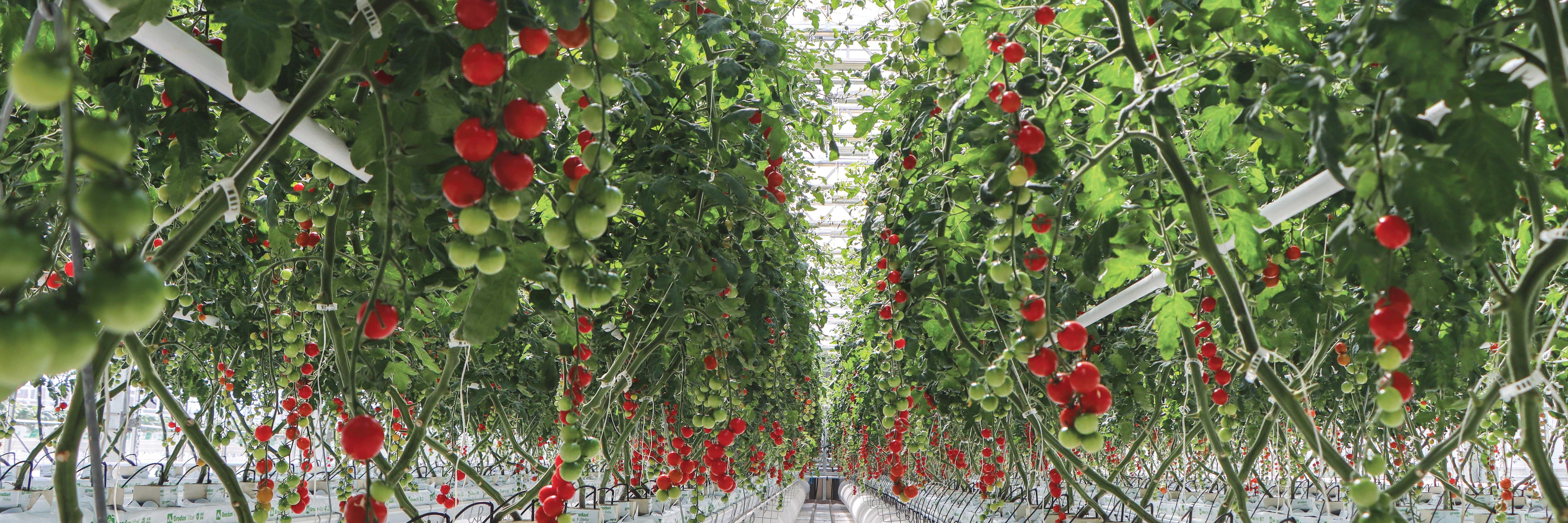
Growing tomatoes in a greenhouse gives growers control over the factors that decide whether a crop thrives or struggles, like temperature, moisture, airflow and light. A well-managed greenhouse for tomatoes protects tomato plants from frost, heavy rain and pests, and it stretches the growing season well beyond what outdoor beds allow.
GrowSpan designs controlled environments to grow tomatoes, peppers and more year-round, but the structure is only part of the equation. Daily habits inside it matter just as much. This guide covers the best practices for growing tomatoes in a greenhouse and explores how growing conditions influence tomato flavor, fruit quality and yield.
What Are The Best Practices For Growing Tomatoes In A Greenhouse?
Successful greenhouse tomato production comes down to a handful of consistent habits: matching the variety to the system, holding steady temperatures, controlling humidity, watering evenly, training plants vertically and watching closely for pests.
Start With The Right Varieties
Indeterminate, greenhouse-adapted varieties are the standard choice for growing tomatoes in a greenhouse, because the vines keep producing over a long harvest window. Disease-resistant selections reduce risk, especially where earlier crops ran into problems.
Cherry and cocktail types are forgiving, while beefsteak and heirloom tomato plants can deliver outstanding fruit, but demand tighter crop management. The soil or growing medium should be tested before planting, with a target pH of roughly 5.8 to 6.6.
Hold Temperatures In The Sweet Spot
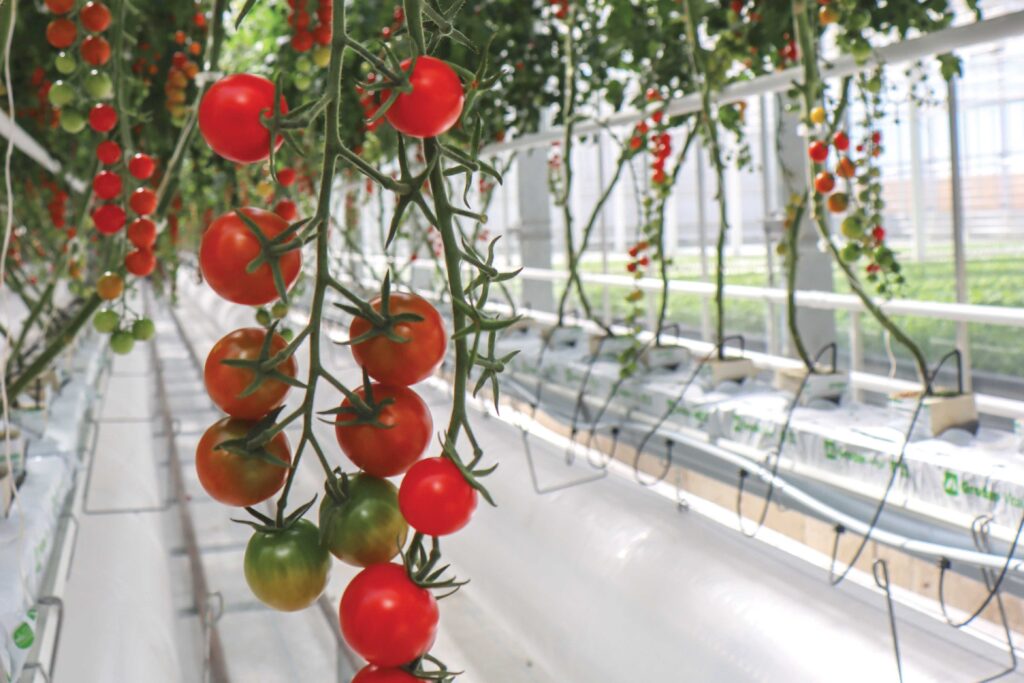
Reliable climate control is the foundation of growing tomatoes in a greenhouse year-round. Tomato plants perform best with daytime temperatures of roughly 70°F to 85°F and nighttime temperatures between 60°F and 70°F.
Sustained heat above the mid-80s can interfere with pollination and cause flowers to drop, while cold nights below about 55°F slow growth. A sunny day can push greenhouse temperatures up quickly even when outdoor conditions feel mild, so a ventilation plan has to be in place before the heat arrives.
Roof vents, sidewall vents, automatic vent openers and exhaust fans move excess heat out, while evaporative cooling and shade systems help through peak summer. In colder regions, supplemental heat prevents prolonged cold nights.
Root zone heating warms plants where it matters most and allows air temperatures to run 5 to 15 degrees cooler, which trims winter energy use. Tying heating, cooling and ventilation into a greenhouse controller keeps conditions in range overnight and on weekends.
Sign Up Now To Learn More
Manage Humidity And Airflow
Humidity discipline is one of the biggest differences between a thriving greenhouse for tomatoes and a disease-prone one. Relative humidity between roughly 50 percent and 70 percent keeps tomato plants healthy.
Leaf mold can become a serious risk above about 85 percent humidity, and gray mold thrives when humid air settles on wet foliage. Horizontal airflow fans keep air moving through the canopy, which strengthens stems and discourages pests, while vents or exhaust fans swap humid greenhouse air for drier outside air. Foliage should never stay wet overnight.
Water Consistently And Feed By Growth Stage
Tomatoes react badly to erratic watering, which makes irrigation central to growing tomatoes in a greenhouse. Swings between bone-dry and saturated root zones lead to fruit cracking and blossom-end rot.
Drip irrigation delivers water straight to the root zone, keeps foliage dry and can carry fertilizer through fertigation. Monitoring the growing medium is more reliable than watering by the calendar, and irrigation should increase as plants grow and fruit load builds.
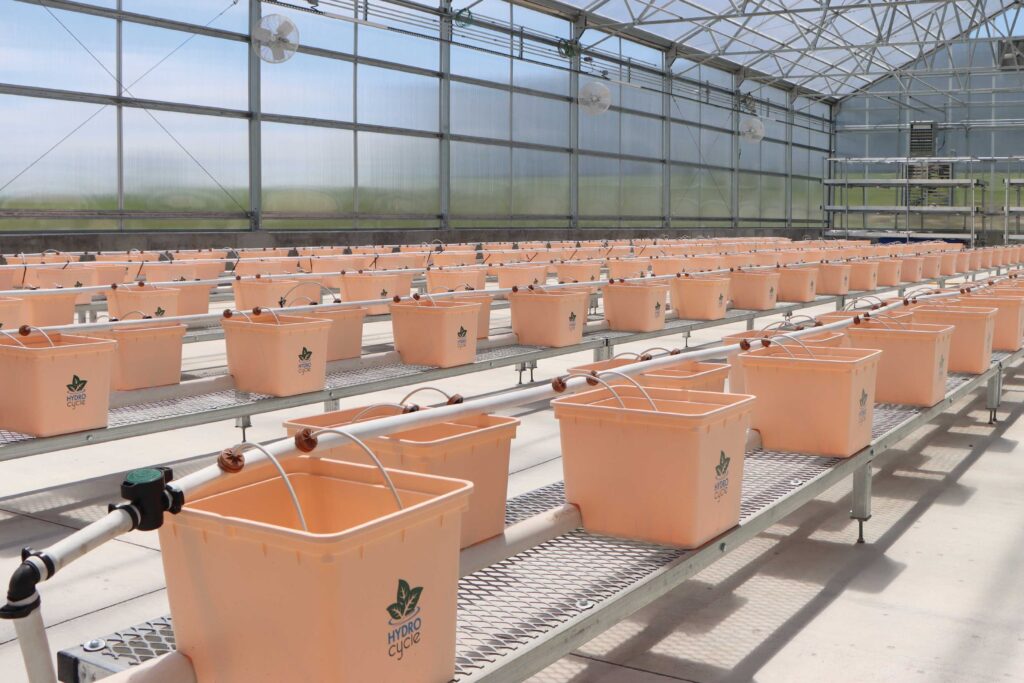
Feeding should follow the growth stage. A balanced fertilizer suits early vegetative growth, then a tomato feed higher in potassium takes over once fruit clusters form, with close attention to calcium and magnesium. Heavy nitrogen produces large, leafy plants, without more fruit, so soil and tissue testing make better guides than guesswork.
Prune, Train And Support
Greenhouse tomatoes should never sprawl on the floor. Indeterminate plants do best on vertical strings or trellises, trained to one or two main stems with regular removal of suckers, the side shoots that form where a leaf meets the stem.
Older, yellowing leaves beneath ripening clusters can be removed to improve airflow, but over-pruning exposes fruit to sunscald and cracking. Topping the plant, which means pinching off the main growing tip about six to eight weeks before the planned final harvest, redirects energy into ripening existing fruit instead of adding height.
Help Pollination Along
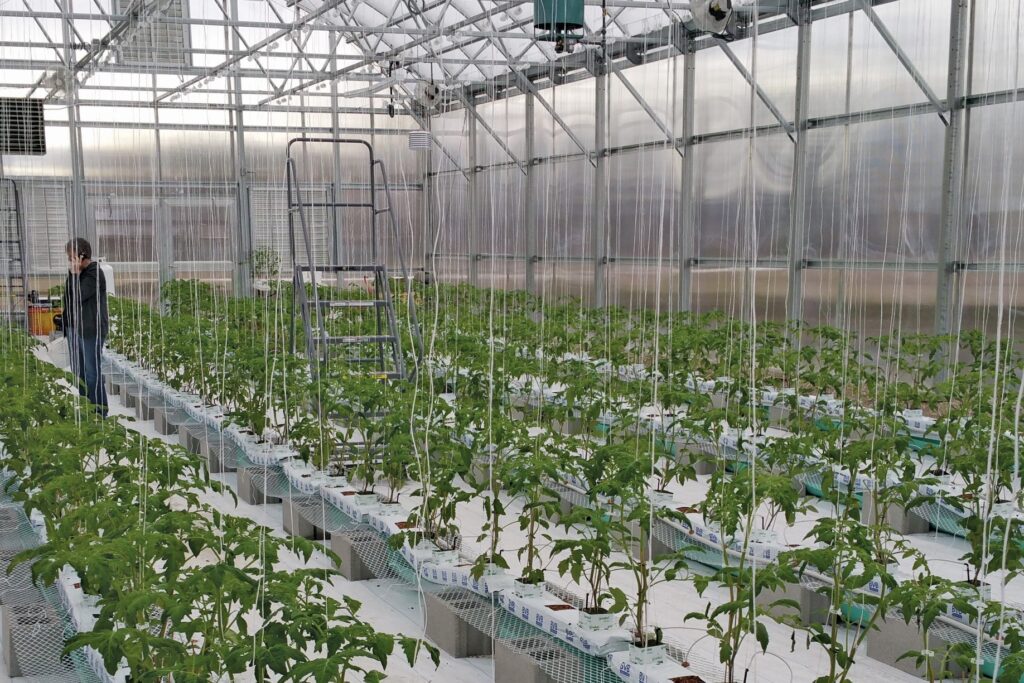
Tomatoes are self-fertile, but flowers still need movement to release pollen, and an enclosed structure lacks natural wind. Gently shaking flower clusters or support strings every couple of days around midday, or using an electric pollinator, improves fruit set. Heat control matters most here, since high temperatures cause flower drop, regardless of technique.
Scout For Pests And Keep Things Clean
The conditions that suit tomato plants also suit aphids, whiteflies, spider mites, thrips and caterpillars. Weekly inspections of leaf undersides, growing tips, flowers and developing fruit catch problems early, when they are far easier to manage.
Sanitized tools, benches and surfaces, prompt removal of diseased leaves and fallen fruit and a thorough clean-out between crops limit disease carryover. A simple routine keeps everything on track: temperature, humidity and irrigation checks daily, training and sucker removal several times per week and equipment checks weekly. A clean, well-inspected greenhouse for tomatoes stays productive far longer than a neglected one.
Hydroponic Tomato Tips From GrowSpan's Greenhouse Manager
How Does Greenhouse Cultivation Affect The Flavor And Yield Of Tomatoes?
In a greenhouse for tomatoes, the controlled environment changes both how much fruit a plant produces and how that fruit tastes.
Yield: More Fruit From Controlled Conditions
A protected environment typically supports higher, more consistent yields than open-field production, and that output is a major reason growers choose a greenhouse for tomatoes. Frost, hail, heavy rain and extreme heat are kept at bay, so the harvest window extends and crop loss shrinks.
Growers can also tune temperature, humidity, carbon dioxide and light to drive photosynthesis. CO2 enrichment and supplemental lighting are both available for greenhouse operations, and one meta-analysis reported that supplemental LED lighting raised tomato yield by about 40 percent. Precise irrigation and fertigation add further gains, including in hydroponic systems, like NFT and Dutch bucket setups.
Flavor: Vine-Ripened And Carefully Managed
Tomato flavor depends on the balance of sugars, organic acids and aromatic compounds. Many field tomatoes shipped long distances are picked green and ripen off the vine, which mutes taste.
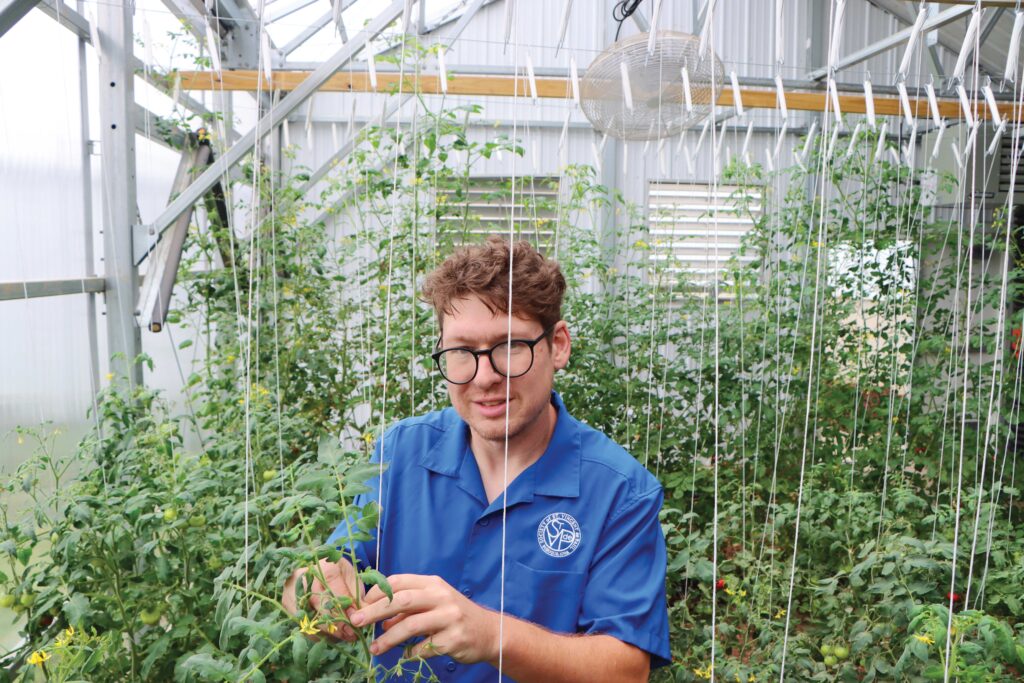
Growing tomatoes in a greenhouse allows fruit to stay on the vine until fully developed, building more sugar and aroma. In hydroponic systems, adjusting the electrical conductivity (EC) of the nutrient solution, or applying mild and carefully controlled water stress, concentrates sugars and acids and deepens the sweet-tart profile.
The Trade-Offs To Manage
Maximizing yield does not automatically maximize flavor. Excessive stress cuts yield, and low-light winter conditions can produce milder fruit, unless supplemental lighting fills the gap.
Variety, irrigation, nutrient concentration, light and harvest maturity all influence taste, so flavor when growing tomatoes in a greenhouse depends heavily on how well the environment is managed. Intense summer sun can give open-field tomatoes exceptional peak-season flavor, but a greenhouse is able to deliver consistent quality throughout the entire year.
Plan Your Greenhouse For Tomatoes
Every operation is different, and a GrowSpan Greenhouse Specialist can match the structure, heating, cooling, ventilation, irrigation and controls to the crop, scale and climate, so a greenhouse for tomatoes performs from the first planting. With in-house design, financing and installation, GrowSpan keeps greenhouse projects under one roof from the first sketch to the first harvest.
To start growing tomatoes in a greenhouse built around your operation's goals, call or Request a Quote today.
Related Articles
Greenhouse Irrigation and Fertigation Offer Boosts to Efficiency and Profitability
While improving the effectiveness of all greenhouse functions should be the end goal, a great place to start is with one of the most essential tasks for any grower.
A Climate Controlled Greenhouse Is The Ideal Setting For Controlled Environment Agriculture
For many growers, a climate controlled greenhouse is the best setting to implement controlled environment agriculture.
Microgreen Systems as a Source of Supplemental Income
By selling microgreens to local grocers, restaurants or individuals, growers can put their gardening skills to use and generate an extra source of income.
Planning And Maintaining Your Hydroponic Setup
This guide breaks down how growers can plan, build and maintain a hydroponic setup that delivers reliable results over time.